
|
||||||
|---|---|---|---|---|---|---|
 |
|
|
|
|
|
|
|
start |
author |
impressum |
datenschutz
|
||||||
Echocardiography 5 minutes before starting

|
||||||
Examples of pathological findings |
||||||
|
—Echocardiographic examinations |
—Cardiac function and PA pressure |
—Examples of pathological findings
Valvular heart disease
Intracardiac masses
Pericardial disease
Cardiomyopathies
Aortic dissection
Congenital heart disease
echo|case |
||||
| Pericardial disease | ||||||
|
Guidelines and Standards Recommendations for Multimodality Cardiovascular Imaging of Patients with Pericardial Disease, 2013
Pericardial effusion |
||||||
Left:
small pericardial effusion with inferior basal localization.
|
||||||
|
||||||
Left:
circular, mid-size pericar- dial effusion, with posterior und lateral accentuation.
|
||||||
|
||||||
Left:
mid-size to large pericardial effusion with severe hemodynamic compromise,
as evidenced through RV compression.
|
||||||
|
||||||
Left:
this same case from the parasternal short axis. Aspirated volumen was 1.5 liters.
|
||||||
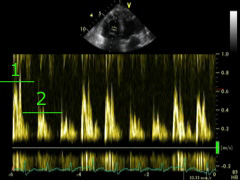
|
Following images show charac- teristics of pericardial compres- sion. |
|||||
|
||||||
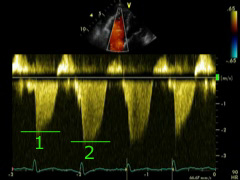
|
Left:
tricuspid regurgitation is also more evident during inspiration, here more accentuated
as in physiologic status.
|
|||||
|
||||||
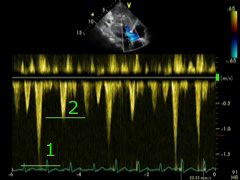
|
Left:
inferior vena cava is plethoric and show no inspiratory collapse.
|
|||||
©
Derliz Mereles |
||||||
|
echobasics | free echocardiography tutorial online since 2004 |
||||||
 ORC
ORC